
Floral, fruity, layered. The reason a haze smells like a haze.
Worth knowing
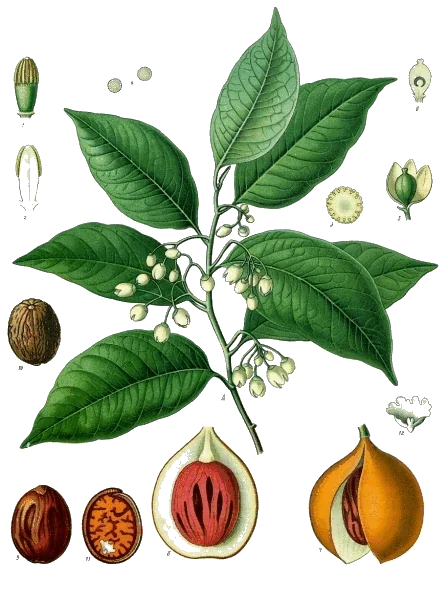
The defining note in haze strains, found in lilac, apple, nutmeg, and tea tree, which is why it reads ‘perfumed’ rather than weedy.
Did you know?
Despite defining haze, terpinolene is one of the least-studied major terpenes, and the one lab study on record (2013) found sedation, not the buzzy lift it’s famous for.
How it tends to land
Commonly reported as bright and heady. Tendencies, not promises. Your body writes the last word.
Pairs well with
Examined for these conditions
No condition has research pointing specifically to this terpene yet. Browse all conditions
Where the evidence stands
Ranked by how much each finding can actually tell you, strongest first. A trial in people outranks a study in cells, including when the answer is no.
Animal studies
Sedative effect when inhaled
Sedation in mice. Using mice with an impaired sense of smell, the researchers showed it works after being absorbed through the nose into the body, not merely by smelling it. Ito K, Ito M. (2013). Journal of Natural Medicines, 67(4). PubMed 23339024
Animal studies · not established
An energizing, uplifting effect
The reputation that defines haze strains. The one laboratory study on record found sedation instead, and direct human evidence is essentially absent, which may be why patient reports vary so widely here. PubMed 23339024
Chemical identity, formula and molar mass: PubChem CID 11463, National Center for Biotechnology Information.
Terpenology is educational, not medical advice. Terpene effects are tendencies commonly reported by patients and early research, never guaranteed outcomes. Work with your certifying physician and pharmacist.