
Floral, soft, calming. The terpene that quiets the chatter.
Worth knowing
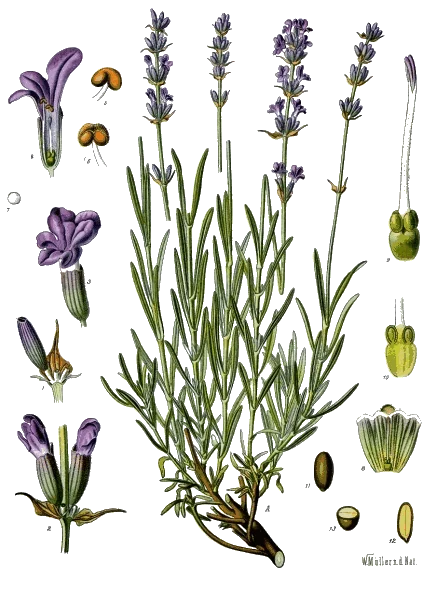
The terpene cannabis shares with lavender, the calm centuries of folk use built a reputation on.
Did you know?
A small human study found inhaled linalool modulated cortisol under stress, though it reports no direction or magnitude, and linalool’s two mirror-image forms behaved differently. Lab and animal work point to the brain’s GABA calming system as the likely pathway, and much of the calm in studies runs through the sense of smell itself.
How it tends to land
Commonly reported as calm and quieting. Tendencies, not promises. Your body writes the last word.
Pairs well with
Examined for these conditions
Anxiety and Panic/Attention-Deficit/Hyperactivity Disorder/Autism Spectrum Disorder/Depression/Epilepsy and Seizures/PTSD/Perimenopause / See all conditions
Where the evidence stands
Ranked by how much each finding can actually tell you, strongest first. A trial in people outranks a study in cells, including when the answer is no.
Human study
Changed cortisol response under stress
In 24 people, inhaled linalool modulated salivary cortisol and produced relaxing effects. Honest limits: the study does not report which direction or by how much, and linalool's two mirror-image forms behaved differently: one was actually activating for heart rate and blood pressure. Höferl M, Krist S, Buchbauer G. (2006). Planta Medica, 72(13). PubMed 16983600
Animal studies
Calming effect through the brain's GABA system
Calming without clumsiness. Two details make this unusually clean: the effect disappeared in mice that could not smell, and it was blocked by a drug that blocks GABA-A receptors. So the calm is triggered through smell, rather than linalool acting on the brain as a drug. Harada H, Kashiwadani H, Kanmura Y, et al. (2018). Frontiers in Behavioral Neuroscience, 12:241. PubMed 30405369
Chemical identity, formula and molar mass: PubChem CID 6549, National Center for Biotechnology Information.
Terpenology is educational, not medical advice. Terpene effects are tendencies commonly reported by patients and early research, never guaranteed outcomes. Work with your certifying physician and pharmacist.