
Piney, musky, medicinal. The terpene that smells like a forest floor after rain.
Worth knowing
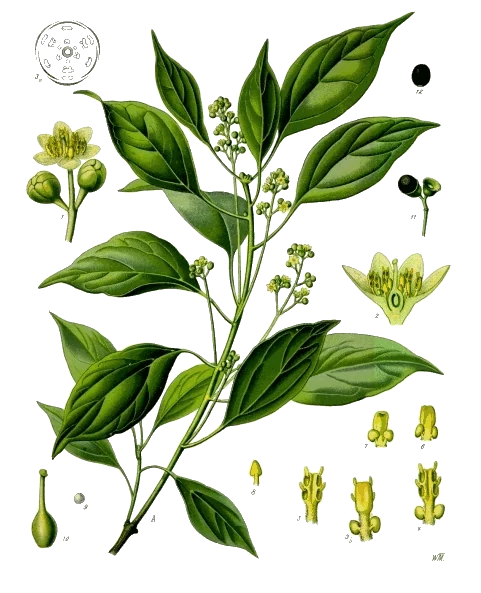
A major component of camphor oil, long used in chest rubs and muscle balms.
Did you know?
In animal studies camphene lowers blood cholesterol and triglycerides, one of a few terpenes with an early lipid-lowering signal. Early work, not a treatment.
How it tends to land
Commonly reported as earthy and grounding. Tendencies, not promises. Your body writes the last word.
Pairs well with
Examined for these conditions
No condition has research pointing specifically to this terpene yet. Browse all conditions
Where the evidence stands
Ranked by how much each finding can actually tell you, strongest first. A trial in people outranks a study in cells, including when the answer is no.
Animal studies
Lowered cholesterol and triglycerides
Large reductions in cholesterol and triglycerides in rats, by a route different from how statins work. Dose caveat that matters: the amount given was far above anything a person encounters from food or a terpene percentage. Vallianou I, Peroulis N, Pantazis P, et al. (2011). PLoS ONE, 6(11):e20516. PubMed 22073134
Cell studies
Antioxidant activity
Raised the cells' own antioxidant defenses and reduced oxidative damage. Tiwari M, Kakkar P. (2009). Toxicology in Vitro, 23(2). PubMed 19135518
Chemical identity, formula and molar mass: PubChem CID 6616, National Center for Biotechnology Information.
Terpenology is educational, not medical advice. Terpene effects are tendencies commonly reported by patients and early research, never guaranteed outcomes. Work with your certifying physician and pharmacist.