
Terpene Field Guide
Cymene
SY-meen · the spice-rack terpene
Citrus up front, dried herbs underneath. The spice-rack terpene that travels with thyme, cumin, and oregano.
Aroma and sensory
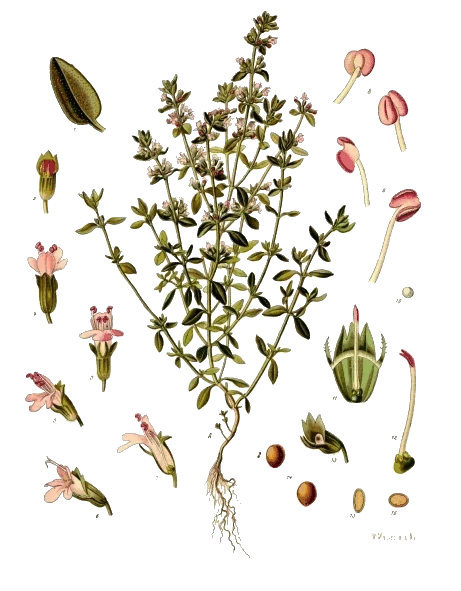
Fresh citrus with a dry, herbal edge, like the warm shelf of a spice cabinet: thyme, oregano, a little cumin and coriander. Where a big citrus terpene like limonene is all brightness, cymene brings the woody, slightly spicy backbone underneath it. It is the note that makes a citrus strain smell a touch more grown-up.
It is a relative of carvacrol and thymol, the compounds that give oregano and thyme their punch, which is why a strain carrying cymene can read a little like a herb garden in the background.
One note for label readers: many Pennsylvania labels print this as P-Cymene (the “para” isomer). Same molecule. Terpenology shows it as Cymene, the common name used across the terpene world.
What it tends to do
Honestly: cymene is almost always a supporting player, not a lead. You will usually meet it as a small number on a panel rather than the terpene driving a strain. On the label that may have brought you here it sat at around 0.05%, a trace note. The percentage on your label is the honest measure of its weight.
What makes it worth knowing anyway: early research, mostly in mice, has flagged p-cymene for anti-inflammatory and pain-dampening (antinociceptive) activity, often when applied topically. That work is young and was not done in cannabis products at the levels a label percentage delivers, so treat it as a direction worth watching, not a promise.
Where it more plausibly earns its keep is aroma and ensemble. Cymene is part of what gives citrus- and herb-forward strains their dry, spice-rack edge. If those profiles consistently work for you, cymene is one of the quiet reasons the bouquet smells the way it does.
Strains where it tends to show up
P-cymene rarely tops a panel, so naming “cymene strains” would oversell it. You are far more likely to spot it the way you just did: a minor entry, a few hundredths of a percent, riding alongside bigger terpenes on a citrus- or herb-forward strain.
When you see it listed, read it as part of the supporting cast that shapes a strain’s full character, not the headliner. The terpenes above it on the panel are doing most of the steering.
Plays well with
- Limonene. The citrus pairing. P-cymene adds a dry, herbal counterweight to limonene’s brightness so the citrus reads less like candy and more like peel.
- Pinene. Together they lean woodier and a touch medicinal, the herb-and-evergreen corner of the aroma wheel.
- Caryophyllene. Spice over spice. Caryophyllene brings the documented anti-inflammatory work; p-cymene seasons the edges of the profile.
Worth knowing
Cymene is a well-characterized monoterpene found in cumin, thyme, oregano, and coriander, and is widely used as a flavor and fragrance ingredient. Its presence and aroma are not in dispute.
Animal and isolated-compound studies report anti-inflammatory and antinociceptive (pain-dampening) activity. Early, not human, and not at the concentrations a cannabis label percentage delivers.
Cell studies report antioxidant and antimicrobial activity, as with many minor terpenes. These come from concentrated isolated-compound work, well above what a trace label percentage delivers.
Patients drawn to citrus- and herb-forward strains are often getting trace p-cymene as part of that signature. If that bouquet consistently works for you, this quiet terpene is one of its fingerprints.